

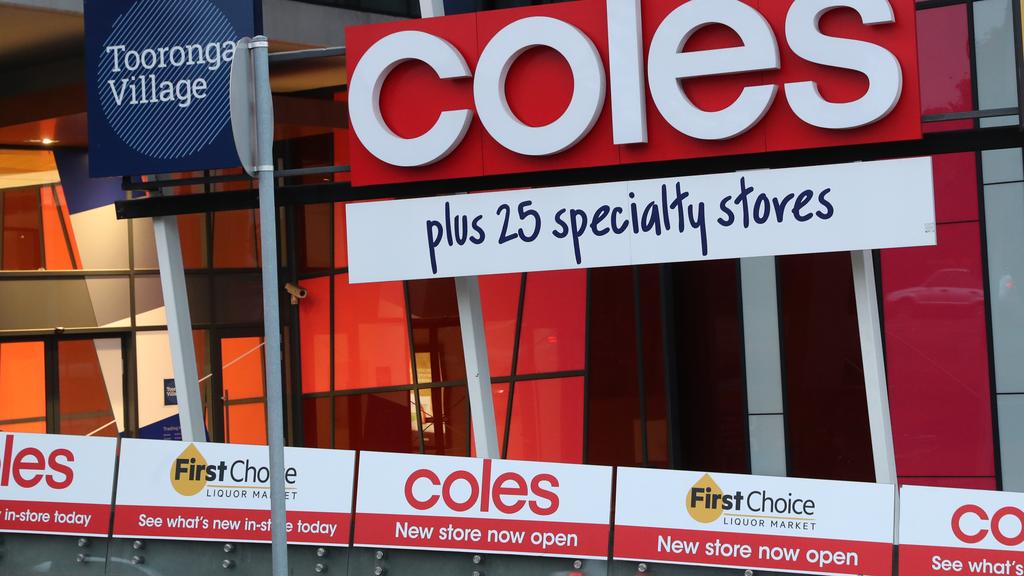

Tooronga Village is anchored by Coles, has two mini-majors, 20 specialty stores and five kiosks. Picture: David Crosling
Property funds manager Charter Hall is again expanding its retail property holdings, picking up Melbourne’s well-known Tooronga Village shopping centre for $79m.
The company has identified convenience retail as a primary growth area, and the sector’s resilience is boosting its performance even as larger malls are under pressure.
The trend, which emerged ahead of the pandemic, is solidifying as consumers focus on everyday needs and shift away from discretionary spending. At the same time, large supermarket chains Woolworths and Coles are rolling out fewer centres because of rising construction costs, even though population growth is increasing.
The company is buying for its unlisted Charter Hall Convenience Retail Fund, which has attracted about $3bn of institutional backing and is targeting a $4.5bn-plus portfolio.
Charter Hall is buying the Melbourne asset from Newmark Capital, which acquired the centre from Stockland in 2019 for about $63.2m. Newmark sold five strata podium lots for $7m in 2021-22 and returned capital to investors at that time.
Newmark boosted the centre’s income and the sale is a strong result for investors.
The Tooronga Village deal will show a capitalisation rate of about 5.75 per cent. The move to expand the vehicle came as Charter Hall chief executive David Harrison nominated the sector as a key area for his business’s expansion.
Charter Hall is stepping up its property purchasing at a time when few others are in the market and many rival players are making bids contingent on raising capital to complete deals.
Tooronga Village is a 7724sq m neighbourhood centre anchored by Coles, alongside two mini-majors, 20 specialty stores, five kiosks, an ATM, car wash and extensive basement parking. It serves the blue-chip areas of Toorak, Malvern, Hawthorn, Kooyong and Glen Iris.
The off-market deal was negotiated by Tim McIntosh and Will Heffernan from Colliers, and Stonebridge Property Group’s Justin Dowers and Kevin Tong.
Mr McIntosh said the centre’s strong trading fundamentals and strategic positioning in Melbourne’s inner east attracted Charter Hall’s interest.
“Tooronga Village is anchored by a highly productive Coles supermarket, with the centre sales productivity above $17,000 per square metre, ranking the centre as one of the highest performing neighbourhoods in inner metropolitan Melbourne,” he said. “Assets of this calibre are tightly held and rarely traded, particularly within Melbourne’s inner eastern suburbs, making it a highly valuable investment proposition.”
Mr Dowers said the sale reflected the continued institutional demand for dominant convenience retail assets within affluent metropolitan catchments.
“High-quality neighbourhood shopping centres continue to attract significant investor interest, driven by strong population growth, resilient supermarket performance and limited incoming new supply,” he said.
Mr Dowers said the strong rental growth experienced across the neighbourhood shopping centre sector was driving substantial capital reweighting into convenience retail. This transaction alongside the recent sales of Burwood Brickworks and Coles and Aldi Kilmore amounted to more than $220m of Melbourne neighbourhood centre transactions in the past two months.
Charter Hall is separately buying Yeppoon Central shopping centre on the state’s Capricorn Coast from developer Laurence Lancini. The Woolworths-anchored subregional shopping centre is selling for more than $70m and will show a yield of about 6.5 per cent.
Charter Hall has been the top buyer of convenience retail assets this year and its purchases include $250m worth of centres in Queensland and NSW bought from Vicinity Centres.
Last year, it bought the Burwood One Shopping Centre in Melbourne for $210m and bought Southport Park from billionaire John Van Lieshout for $152.5m.