

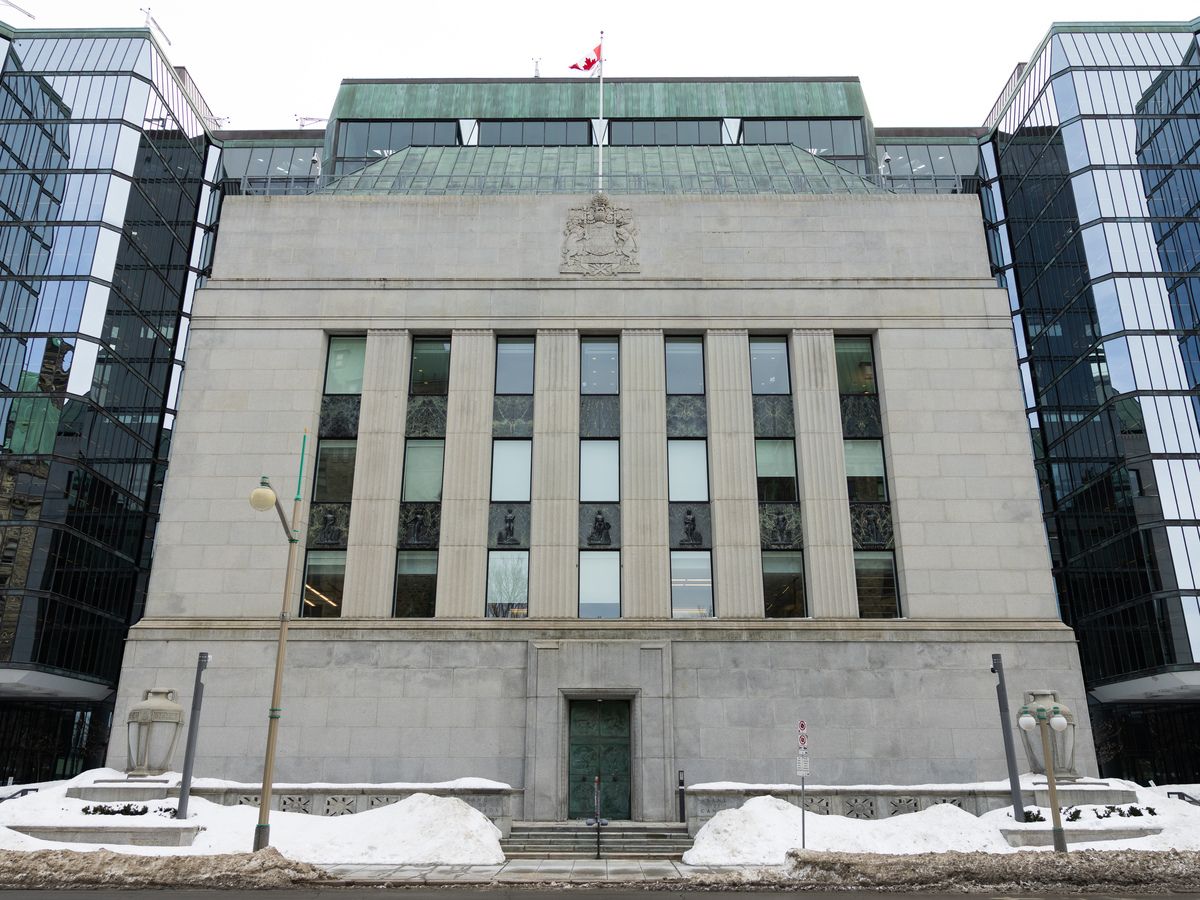
People put a lot of faith in what the
Bank of Canada
says, and they should. It’s a reputable institution that indirectly dictates what over 10 million Canadians pay on their mortgages.
But, intentional or not, the central bank also has a habit of saying things that lead people to think in a certain direction.
Despite the Bank’s good intentions, sometimes that direction is not in the borrower’s best interest — literally.
Exhibit A: the infamous “transitory”
inflation
debacle of 2021.
That’s where the Bank of Canada and other central banks were busy reassuring borrowers that inflation would be temporary (it always is, but that doesn’t prevent rate hikes).
This was its narrative just months before it strapped Canada’s prime rate to an Artemis II rocket, launching it 475 basis points in just 17 months.
That little “transitory” oopsie moment led to the biggest percentage point hiking cycle in over three decades, and the largest percentage increase (from 2.45 per cent to 7.20 per cent) in Canadian history.
By the time the Bank of Canada got serious and tightened rates, inflation had already reached 5.7 per cent, 370 basis points above its mandated target. That’s like showing up to a fire with a garden hose — after the house is gone.
Such missteps are hardly unprecedented. There’s a well-documented pattern of central banks downplaying or underestimating inflation in the early stages of inflation cycles.
There can be several reasons for it.
For one, central banks know their words move markets, sometimes more than the data itself.
If the Bank of Canada signals alarm about inflation too early, it can trigger a self-reinforcing cycle. Bond yields spike,
mortgage rates
jump and financial conditions tighten abruptly.
So, there’s a built-in incentive to label emerging inflation as “temporary” (“transitory” has been banished from the central banking dictionary) until the data makes that stance indefensible. And typically it eventually does, often boldly.
Second, central bank inflation forecasts have a documented tendency to undershoot during the early phases of inflation spikes. The Bank of Canada, the U.S. Federal Reserve, the European Central Bank and others were all behind the curve in 2021–2022.
Part of this is model-driven (their models were calibrated to a low-inflation era, something the Bank of Canada is trying to fix as we speak), and part of it is institutional. Nobody wants to be the policymaker who pulled the fire alarm during a false alarm.
Third, they seldom know for sure where inflation will stop — until it’s too late.
For that reason, central bankers often prefer carefully hedged language like “monitoring closely,” “data-dependent,” and “risks are balanced,” which sound reassuring until you realize they all basically mean “we’re not sure yet.”
These phrases let the Bank of Canada preserve optionality without explicitly telling the public “we think inflation is about to run hot.”
Lastly, for central banks with a two per cent inflation target like Canada’s, admitting early on that they expect to overshoot it can undermine the very credibility that anchors inflation expectations.
In fact, it’s a funny little paradox that the mandate to control expectations sometimes leads to understating the very risks that threaten them.
We saw some rare candour on this in 2021 when Bank of Canada governor
Tiff Macklem
was asked how confident he was that inflation is really transitory. He
, “It’s the job of central banks to say it is.”
Now, I don’t know about you, but my mother always told me there’s a kernel of truth in what people say, just before they let on they’re kidding.
Don’t get me wrong, this isn’t a prosecution of our central bank. There are good, dedicated public servants over there, and they have an incredibly important and difficult job.
What I’m trying to get across is that it sometimes pays (or saves) borrowers to do their own independent critical thinking about rates.
As this is being written, the price of West Texas Intermediate (WTI) oil looks like it’s on a mission to hit $120-plus per barrel. If such levels were sustained beyond a short number of weeks, inflation could blow right through the Bank of Canada’s three per cent inflation tolerance (a.k.a. the top of its inflation control range).
If history is a guide, the eventual result of such a shock would be an economic slowdown. But unlike the U.S. Federal Reserve, the Bank of Canada has only one mandate: inflation control. So it would have to respond to rising prices first.
That’s why the most crucial data rate watchers should be monitoring right now are inflation expectations and underlying inflation.
As for the underlying trend, it’s not enough to watch the annual rate of the Bank of Canada’s “average core” metric — the “preferred inflation” measure it was
last year.
Instead, folks need an eye on:
- Three-month average core inflation
- CPIX (which excludes energy and mortgage interest costs)
- Wage growth
- Inflation breadth (the share of CPI components growing over three per cent per year).
Then we need to carefully monitor how the oil shock is pushing them up. And you can bet it will, regardless of how wobbly our economy looks.
By the way, don’t get too excited, but Bank of Canada says it’s launching an interactive dashboard this year to show people what inflation indicators it’s looking at (which will be like Christmas morning for the kind of person whose browser bookmarks are exclusively central bank websites).
Regarding the other crucial piece of the puzzle, inflation expectations, Canada has no timely, free and public source of quality inflation expectations.
The Bank of Canada publishes its numbers only quarterly, which is drastically too infrequent to take an inflation sentiment pulse during a budding shock.
Frankly, it’s a statistical disgrace.
If our country can spend over a billion dollars on a firearms buyback boondoggle, hopefully we can afford a few hundred thousand a year to arm our central bank (and public) with more timely monthly inflation expectations surveys.
We’re talking about crucial data here that guides the policy that affects millions of Canadians’ net worth. But don’t get me started.
The main message is straightforward, even if my path isn’t: don’t over rely on the central bank messaging.
Do your own rate homework and consider locking in some or all of your mortgage if you have more than five years remaining and need to protect against a potential rate spike.
What we’re seeing in the Middle East poses a serious threat to
interest rates
. It’s very possible the Bank of Canada may need to hike multiple times this year despite the inevitable economic damage this crisis will cause.
If so, it’s also possible that our central bank will tell us that — too late.
Robert McLister is a mortgage strategist, interest rate analyst and editor of MortgageLogic.news. You can follow him on X at @RobMcLister.
Looking to save on your mortgage?
For the best national insured and uninsured mortgage rates, updated daily, please visit our mortgage rate page
here
.