

In Australia, a bedroom must be at least 2.4m high, large enough for a bed, have a window for light and ventilation, and meet safety rules.
However, small bedrooms often have property seekers confused.
With the federal government pausing new residential building code changes until 2029, the rules are staying stable – making now the perfect time to clarify exactly what qualifies as a bedroom and why it matters for buyers, renters and renovators.
What makes a bedroom a bedroom in Australia?
TL;DR: In Australia, a room can only be classified as a bedroom if it has adequate size, a minimum 2.4m ceiling height, natural light and ventilation (via a window), and meets safety requirements such as smoke alarms and safe exit access.
For buyers, renters and renovators, that clarity is crucial – especially with bedroom count playing a major role in property value, rental returns and approvals.
Got a specific question? Skip ahead here:

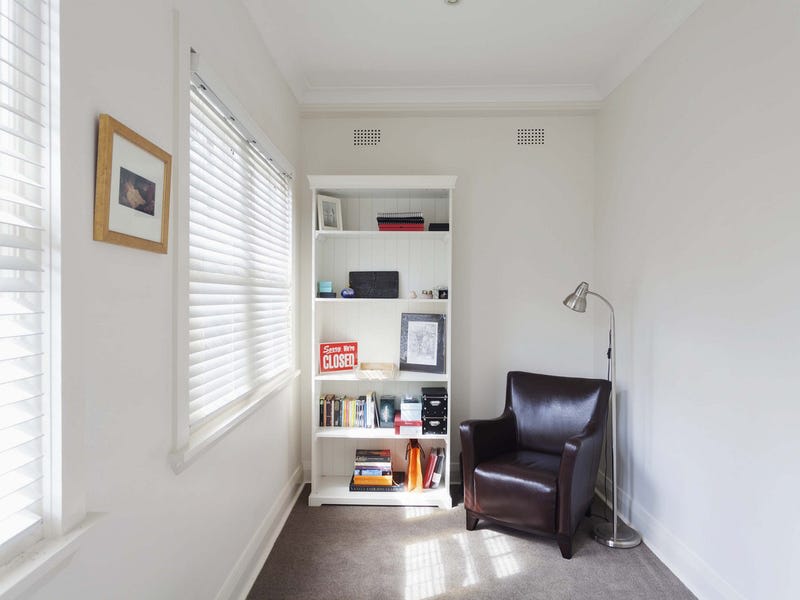
What really makes a bedroom a bedroom? Picture: realestate.com.au
Is there a legal definition of a bedroom?
There isn’t a consistent, legal definition of what makes a room a bedroom in Australia.
However, across most states and territories, the following features are generally expected before a room can be legally marketed or used as a bedroom:
- Ceiling height: At least 2.4 metres in habitable spaces (though attics and lofts may vary with council approval).
- Ventilation and light: A window that can be opened, allowing natural light and fresh air.
- Size and layout: Typically a minimum of around 3m x 3.4m, large enough to fit a standard bed and circulation space.
- Accessibility: Direct access without passing through another bedroom (i.e. privacy and function).
- Compliance with safety codes: Smoke alarms and egress (a safe exit in case of fire).
Daniel Meadth, a senior urban planner at property technology and generative design company Archistar, explained that while the National Construction Code requires a bedroom to be “habitable”.
“The (habitable room) category includes a bedroom, living room, lounge room, music room, television room, kitchen, dining room, sewing room, study, playroom, family room and sunroom,” he said.
“But (it) excludes a bathroom, laundry, water closet, pantry, walk-in wardrobe, corridor, hallway, lobby, photographic darkroom, clothes-drying room, and other spaces of a specialised nature occupied neither frequently nor for extended periods.”
A habitable room must have access to daylight and natural ventilation, which normally comes in the form of an openable window, Mr Meadth added.
A habitable room must have access to natural light. Picture: realestate.com.au/rent
Does a skylight count as a bedroom window?
With the National Construction Code citing access to daylight and natural ventilation as key to how a room can be used, it often prompts questions such as does a skylight count as a bedroom window?
“A skylight could be argued to be access to natural light, however this would need to be checked against the performance standards used in the state or local government area and would probably only be supported in exceptional circumstances,” he said.
Does ceiling height matter?
Jill Henry principal of Stone Real Estate Lindfield, said the code includes ceiling heights, which determine if a room is “habitable” and therefore can be used as a bedroom. The minimum ceiling height is 2.4m.
“(If a room is) under 2.1m, it cannot be classed as a habitable room, instead called a cellar, storage, workshop etc,” she said.
Is there a minimum bedroom size?
Ms Henry said while 2.7m-3m by 3m has become something of an unofficial “minimum” across the country, there isn’t one set minimum size.
Mr Meadth added that many states now also have design guidelines to “further explain the amenity performance standards expected” in standalone houses and for apartments.
“These design standards define the minimum dimensions for bedrooms, such as in the Victorian ‘Better Apartments Design Standards’, where it is 3m by 3.4m for a main bedroom and 3m by 3m for other bedrooms,” he said.
“The size of a bedroom should ultimately reflect its use-ability for its occupants with space for a queen-sized bed, bedside tables, space for clothing and space to actually move within the room.”
Bedroom count and property value
The difference between a two- and three-bedroom listing can add hundreds of dollars a week in rent, or tens of thousands to a sale price.
According to PropTrack data, buyer searches for “three-bedroom homes” consistently outpace smaller homes — underlining how critical bedroom classification is in the market.
Agents also warn against stretching the definition as it can often backfire.
State variations and recent reforms
While the NCC sets national guidance, local planning laws and building contracts also shape bedroom rules:
- Victoria: Building contract reforms passed in 2025 harmonise definitions of domestic building work, adding clarity for renovators.
- NSW: Planning reforms are streamlining approvals, but core bedroom requirements (light, height, size) remain unchanged.
- National: The ABCB is focusing on simplifying the NCC, but residential bedroom definitions are frozen until 2029.
Thinking ahead: After 2029
Post-2029, energy efficiency, condensation and amenity reforms could bring tweaks to residential space standards.
Bedrooms may face updated requirements around ventilation or insulation, particularly as climate resilience becomes a stronger policy focus.
For now, though, the rules are clear and consistent.
Next steps if you’re unsure
- Check your local council guidelines for exact requirements in your area.
- Ask your certifier or builder if a space you’re designing qualifies as a bedroom.
- Explore REA’s suburb guides to see how bedroom count impacts local property prices.
This article was originally published on
3 Oct 2025 at 11:54am
but has been regularly updated to keep the information current.