

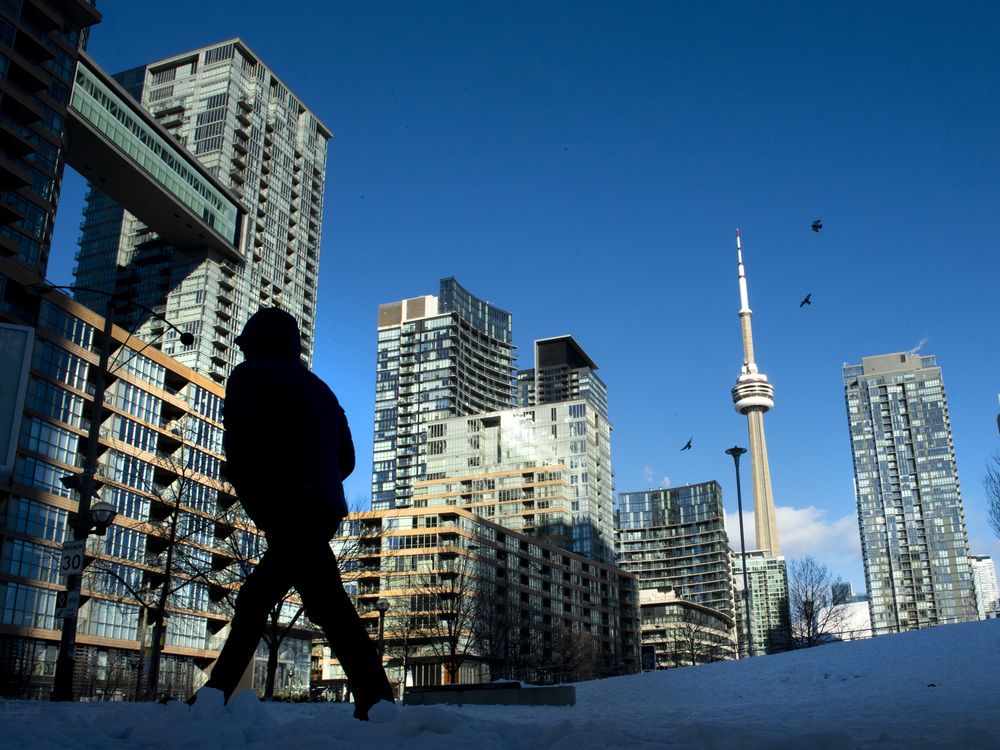
A
rental market
boom and a glut of
condos
has renters in a sweet spot for now, but one expert warns that the somewhat favourable conditions won’t “last” with a supply crunch looming at the end of the decade.
“I’d say to any renter, take advantage of this market, because it’s not going to last,” said Shaun Hildebrand, president of
Urbanation Inc.
, which tracks rental data in the Greater Toronto and Hamilton Area (GTHA).
“It’s rare for rents to decline in Toronto over a sustained period,” he said. It has only happened a few times in the last 20 to 30 years, including during COVID, and now, as a huge supply of
rental housing
becomes available.
Rental starts in the GTHA rose 42 per cent in 2025 from the year before, hitting an annual high last seen in the 1970s, while rental buildings under construction were up 77 per cent compared with five years ago, according to Urbanation. Meanwhile, 6,379 rental units were completed in 2025 — a 40-year high.
All that supply has led to higher vacancy rates, while rents have fallen about 10 per cent from the market peak in the third quarter of 2023. Prices still remain elevated, with average rents of nearly $3,000 for 720 square feet of space — 16 per cent higher than five years ago.
To attract renters, landlords are ramping up their incentive offerings, Hildebrand said.
“Pretty much any building that’s been completed the last couple of years is offering incentives, and in fact, most of them are doing two months’ free rent right now, so that’s a pretty big discount over the course of a 12-month lease,” Hildebrand said.
To entice tenants, landlords are also offering gift cards, cash moving bonuses, free internet and reduced rates on parking and locker rentals, or are promising no rent increases for a certain period of time.
Incentives are working to a degree, but “there’s a lot of cheaper condo rentals out there right now that they’re having to compete against,” Hildebrand said.
Condo rents are typically cheaper than purpose-built rentals because they are often owned by individual investors who have a mortgage and will be more flexible on rent.
With a glut of condos on the market, renters have had more options of late.
Between 2024 and 2025, Urbanation tracked a trend of tenants moving from one condo to a cheaper one.
“There’s been a lot of downshifting in the market towards cheaper units,” Hildebrand said, as “lease transaction volume more than tripled for units renting under $2,000 a month and more than doubled for units renting between $2,000 and $2,200 a month.”
But, he warned, the dynamics currently favouring renters are time-sensitive.
Urbanation is projecting that by 2029 there will be next to no condo construction underway in the GTHA, posing a significant crunch for the rental market as condos make up nearly 80 per cent of rentals.
“That’s going to leave a pretty big supply gap in the marketplace,” Hildebrand said.
And that’s where the purpose-built rental sector has its payday.
Many rental projects that started construction in 2025 are scheduled to come online in a few years, with several projects part of multi-phase plans in affordable locations on the periphery of the downtown core and near to transit hubs.
“I think they’re (developers) looking at this as an opportunity to deliver into an undersupplied market in a few years,” Hildebrand said, adding that despite 10,000 rental-unit starts in 2025, there won’t be enough supply to satisfy a market like the GTHA where condo supply will have dried up.
Hildebrand estimates that another 20,000 to 30,000 units are needed to prepare the purpose-built rental market
for the coming crunch in supply.
“This is the exact right time to start encouraging more rentals to get in the ground, because it will help to keep the supply going. If we want to sustain improvements in
affordability
we need more consistent supply, and it doesn’t look like that’s going to happen, given what we expect to see in terms of deliveries in the coming years,” he said.
• Email: gmvsuhanic@postmedia.com