


On Tuesday the RBA hiked the cash rate to 4.10%, and recent data also shows consumers are tightening their purse strings amid a cloudy economic outlook.
The decision was hotly debated among the nine RBA board members, with votes 5-4 in favour of a hike as opposed to a hold, marking the first non-unanimous decision since July 2025.
“While inflation has fallen substantially since its peak in 2022, it picked up materially in the second half of 2025. Information since the February meeting suggests that some of the increase in inflation reflects greater capacity pressures,” the board’s post-meeting statement read.
“In addition, the conflict in the Middle East has resulted in sharply higher fuel prices, which, if sustained, will add to inflation. Short-term measures of inflation expectations have already risen.”
The hotels sector is buoyant in the face of RBA rate rises, consumer confidence. Picture: Supplied
In the 12 months to January 2026, the consumer price index rose 3.8%, steady on December’s result.
Trimmed mean inflation – what the RBA tends to look at – rose 3.4%, up from 3.3% the month prior.
The third-biggest contributor to headline growth rate was recreation and culture, up 3.7%.
PropTrack senior economist Eleanor Creagh called the 25 basis point hike a modest tightening.
“January’s inflation data showed trimmed-mean inflation still running above target, while housing costs and services inflation remain sticky,” she said.
“While household spending growth has softened in recent months, it continues to expand overall, and the labour market remains resilient. In that environment, the RBA will be wary of declaring the inflation fight over too soon.”

PropTrack senior economist Eleanor Creagh. Picture: realestate.com.au
The RBA’s post-meeting statement also shed some light on uncertainty surrounding conflict in the Middle East.
“Globally, the conflict in the Middle East poses substantial risks in both directions. A longer or more severe conflict could put further upward pressure on global energy prices,” the post-meeting statement read.
“This will push up near-term inflation and could also increase inflation further out if it impairs supply capacity or price rises get built into longer term inflation expectations.
“Higher prices and prolonged uncertainty may cause growth to be lower in Australia’s major trading partners and also in Australia.”
The Westpac-Melbourne Institute consumer confidence index for March – with the survey held as war broke out – reflected this, according to Matthew Hassan, Westpac’s head of Australian macro forecasting.
“Daily responses point to a material weakening over the course of the survey week, likely reflecting growing concerns about the escalating conflict in the Middle East,” he said.
“Responses from those surveyed in the last three days were consistent with an index read of just 84.”
The overall index was up 1.2% to 91.6 but the main drags shifted slightly from consumer finances and major purchases to the near-term economic outlook and strength in the labour force.
The ‘economy, next 12 months’ sub-index recorded a 2.9% fall in March, dropping to 85.9, the weakest read since September 2024 and below the long-term average of 90.7.
The latest commercial property news
Get the latest news and insights straight to you.
Sign up
Consumers responding but still green shoots in key areas
CommBank’s household spending indicator was released last week, showing a pullback in spending in February – the first decline since September 2024.
The index declined 0.5% in February, with spending falling across half of the 12 categories measured.
Annual growth was 4.9%, its slowest pace since August 2025 – coincidentally the last time the RBA cut the cash rate.

Retail led the way for returns in 2025. Picture: Supplied
It appears consumers mostly pull back their discretionary spending in-line with RBA rate rises or talk of them – spending growth was largely led by essential categories.
Households, too, are saving more; the ABS’ GDP figures for the December 2025 quarter showed the household savings ratio rose from 6.1% to 6.9%.
So, where’s the inflation and demand coming from?
General government expenditure rose 3.3% from December 2024 to December 2025, compared to households’ 2.4%.
State and territory final consumption rose 0.9% over the quarter for general government, compared to 0.3% for households.
Robust commercial sectors
Zooming out on CommBank’s index, the strongest categories over the past 12 months have been recreation, with spending up 9.2%, and hospitality – up 6.5%.
This flows onto commercial property sectors such as hotels and retail.
CBRE’s Hotels Australia Overview and Outlook released earlier this month showed hotel transactions reached a record $2.7 billion in 2025.

Experts say hotels will attract more investment in 2026. Picture: Getty
This was largely led by foreign investors, accounting for 78% of the volume, who saw value in diversified demand growth, according to CBRE Regional Director, Hotel Valuations, Troy Craig.
“Hotel operating performance has recovered to cycle highs, underpinned by diversified demand growth from international arrivals, domestic leisure, corporate travel and major events,” he said.
CBRE’s head of hotels research Ally Gibson also said hotels can better respond to demand than other asset classes.
“Unlike other property sectors, hotel room rates reprice daily and revenue responds immediately to changes in demand,” she said.
“So, as supply tightens, hotels convert increased demand into cash flow more quickly than other asset classes, supporting income growth ahead of any meaningful supply response, underpinning feasibility recovery over the medium term.”
Ms Gibson also said supply constraints continue to drive much of the growth.
“CBRE analysis shows forecast hotel supply is expected to be 41% below historic delivery levels for the remainder of the decade, and approximately 35% below forecast demand growth,” she said.
“This sustained undersupply reflects structural delivery headwinds, including cost escalation, high land values, competition for alternative land uses, tighter financing conditions and an increased regulatory burden.”
“As demand recovers, the market is doing so with limited capacity to deliver new stock.”
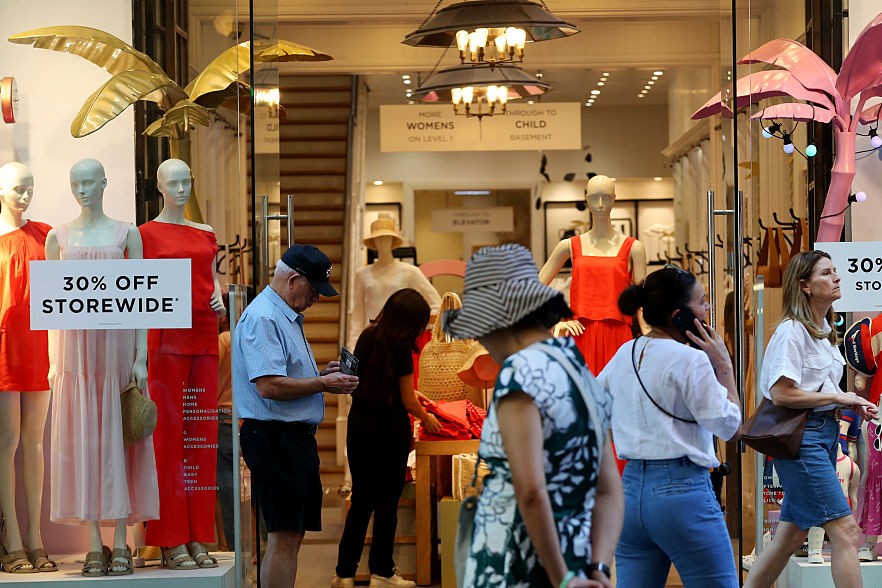
Experts say property investors are keen to invest in Australian retail real estate in 2026. Picture: Getty
The retail sector also continues to be the frontrunner in terms of capital growth, according to Ray White Research.
The overall sector delivered total returns of 9.2%; sub-regional centres were strongest at 10.9%, and regional centres at 10.5%.
Not one retail sub-index posted returns of less than 8%.
“The consistency of performance across all retail subcategories indicates the sector’s structural recovery is broad-based rather than concentrated in specific property types,” Ray White head of research Vanessa Rader said.
Earlier on Tuesday, the ABS also released its arrivals and departures data, which showed net permanent and long-term arrivals exceeded 494,000 in the 12 months to January 2026 – the strongest year on record – which could further cushion the hotel and retail sectors.