

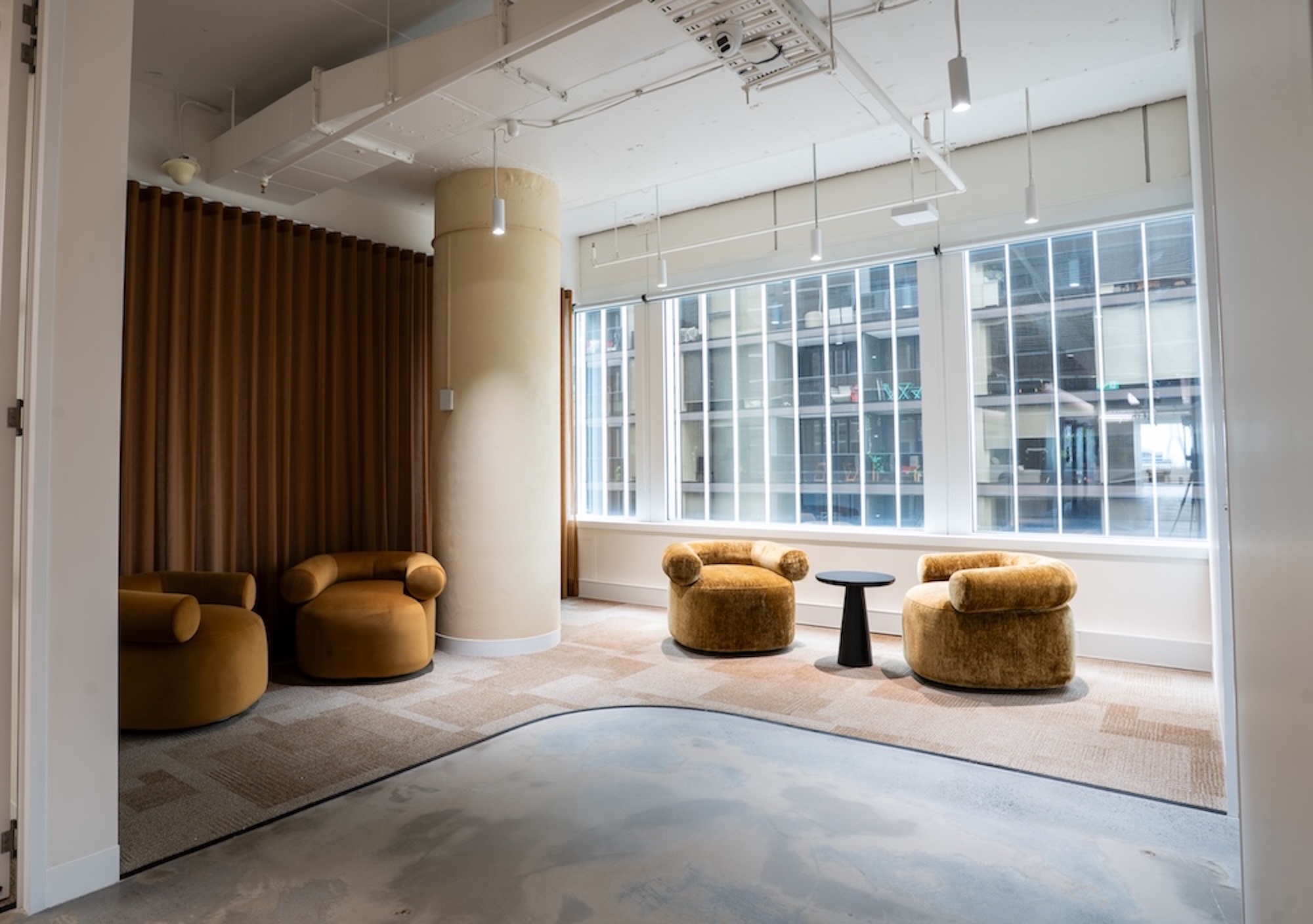
Cubes.Co, one of Australia’s foremost co-working space providers, has launched in the heart of Sydney’s CBD.
Cubes.Co already has 15 spaces across Victoria and South Australia, but until now has been notably absent from New South Wales.
With hybrid work models here to stay, many employees and employers are seeking different ways to connect and work.
Cubes.Co can support team sizes from two to 100. Picture: Supplied
Tobi Skovron, Cubes.Co executive director and founder, said the company already has 35,000 accounts per month across its existing co-working spaces.
“The sentiment toward coworking has flipped significantly in the past few years,” he said. “Coworking used to be seen as an intermediary option, but now, it’s seen as a competitive edge.
“The product has grown and now attracts global brands, banks, scale-ups, and government bodies.
“Bigger companies have realised they can achieve flexibility, connectivity, and efficiency through coworking and that being locked into an underutilised space no longer makes sense to their long-term goals.”

Cubes.Co offers modern and sleek facilities. Picture: Supplied
The new Sydney location, located at 347 Kent Street, can support teams anywhere from two to 100 people, spanning 2,629 sqm on levels 11 and 12 of the King + Kent building.
Co-working is in a post-Covid boom period, with Colliers data from November 2025 showing hybrid-flex offerings increased 34% in Sydney, rising 4.9% over the previous 12 months.
The latest commercial property news
Get the latest news and insights straight to you.
Sign up
This marked the highest annual growth rate since 2020.
Mr Skovron called Sydney the “most important missing piece” for Cubes.Co.
“When you’ve got staff travelling between cities, a network of co-working spaces becomes an extension of your own office,” he said.
“Your team can pick up in Sydney exactly where they left off in Melbourne without you carrying the cost of duplicate and underutilised offices.”

The new Cubes.Co space has views out to Darling Harbour. Picture: Supplied
The new location at King + Kent is managed by Investa on behalf of the Investa Gateway Offices Fund, with expansive views out to Darling Harbour.
Mr Skovron called this opening “just the beginning”.

Cubes.Co CEO Michael Benson (left) and founder Tobi Skovron opening its new Sydney location. Picture: Supplied
A new but challenging period for office spaces
According to Ray White Research, CBD office markets have recorded their strongest period of occupier demand since 2022.
In the 12 months to January 2026, office absorption reached 135,279 sqm as businesses entered a period of footprint expansion rather than consolidation.
However, the strong demand has been overwhelmed by nearly 390,000 sqm of new CBD supply coming online, pushing the vacancy rate to 14.8% from 14.3%.
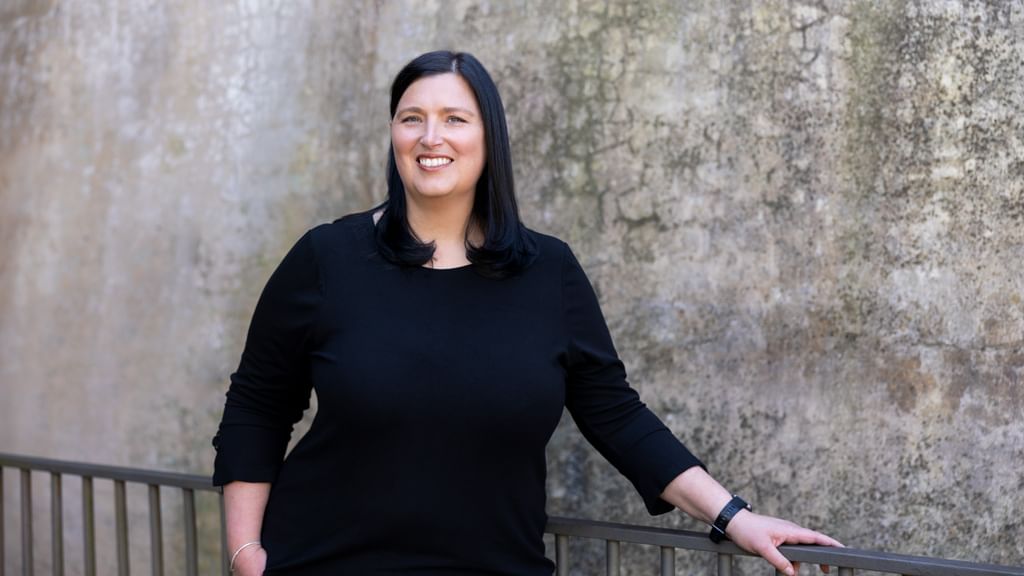
Ray White head of research Vanessa Rader. Picture: Supplied
Ray White head of research Vanessa Rader said this oversupply will “take years to absorb”.
“While the return of genuine tenant activity represents meaningful progress, the reality is that at current absorption rates, vacancy will remain elevated for an extended period even as new supply finally tapers,” she said.
Office spaces continue to be one of the laggard commercial asset classes, with total yields reaching 5.9% and capital growth constrained at 0.4% nationally.
Brisbane CBD had the strongest performance with 10.6% yields and 4.4% capital growth, while Sydney CBD recorded 7.7% and 2.4% respectively.
Melbourne continues to drag down the national average, at 3.8% and 1.6% respectively.

Experts predict Australia’s office property market will improve further in 2026. Picture: Saeed Khan/Getty
“The combination of elevated vacancy rates of 19%, significant new supply in the pipeline, and persistent hybrid work adoption continues to pressure valuations,” Ms Rader said.
“Melbourne represents the clearest example of how vacancy and oversupply dynamics directly impact capital values.”
Colliers’ national research director Joanne Henderson said these challenges could make flexible working spaces more attractive.
“With total office vacancy rates sitting above long-term averages, there’s a clear opportunity to unlock underutilised space through flexible leasing models enabling short term income generation while conventional leasing campaigns are underway,” she said.