

AI hasn’t replaced search. It has replaced selection.
Eighty-two percent of Americans said they are using AI tools to gather real estate and housing market information, with ChatGPT and Google’s Gemini leading the way as the platforms most commonly cited by consumers, based on a recent Realtor.com study.
TAKE THE INMAN INTEL INDEX SURVEY
Not just Google. Not just portals. They are asking ChatGPT, Claude, Gemini and other large language models for guidance, and they are doing it in a world where the average consumer attention span is now eight seconds.
Eight seconds.
You are not competing with another brand. You are competing with everything happening in their lives within that eight-second window. Text messages. Slack notifications. Instagram ads, Spotify commercials, Kids. Calendars. Netflix. Consumers will binge-watch a three-hour series without blinking, but they will skip your ad or your post in a millisecond.
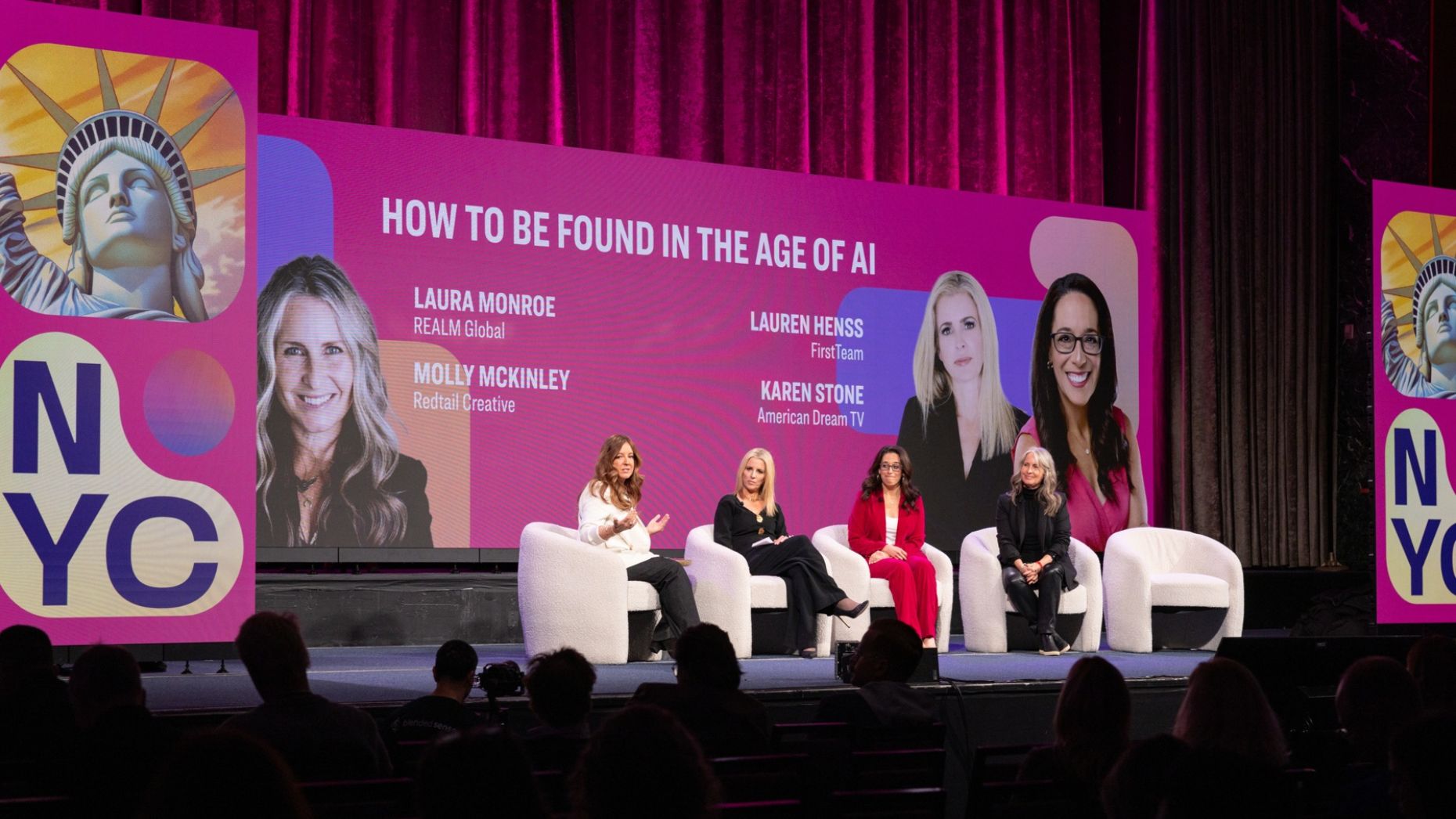
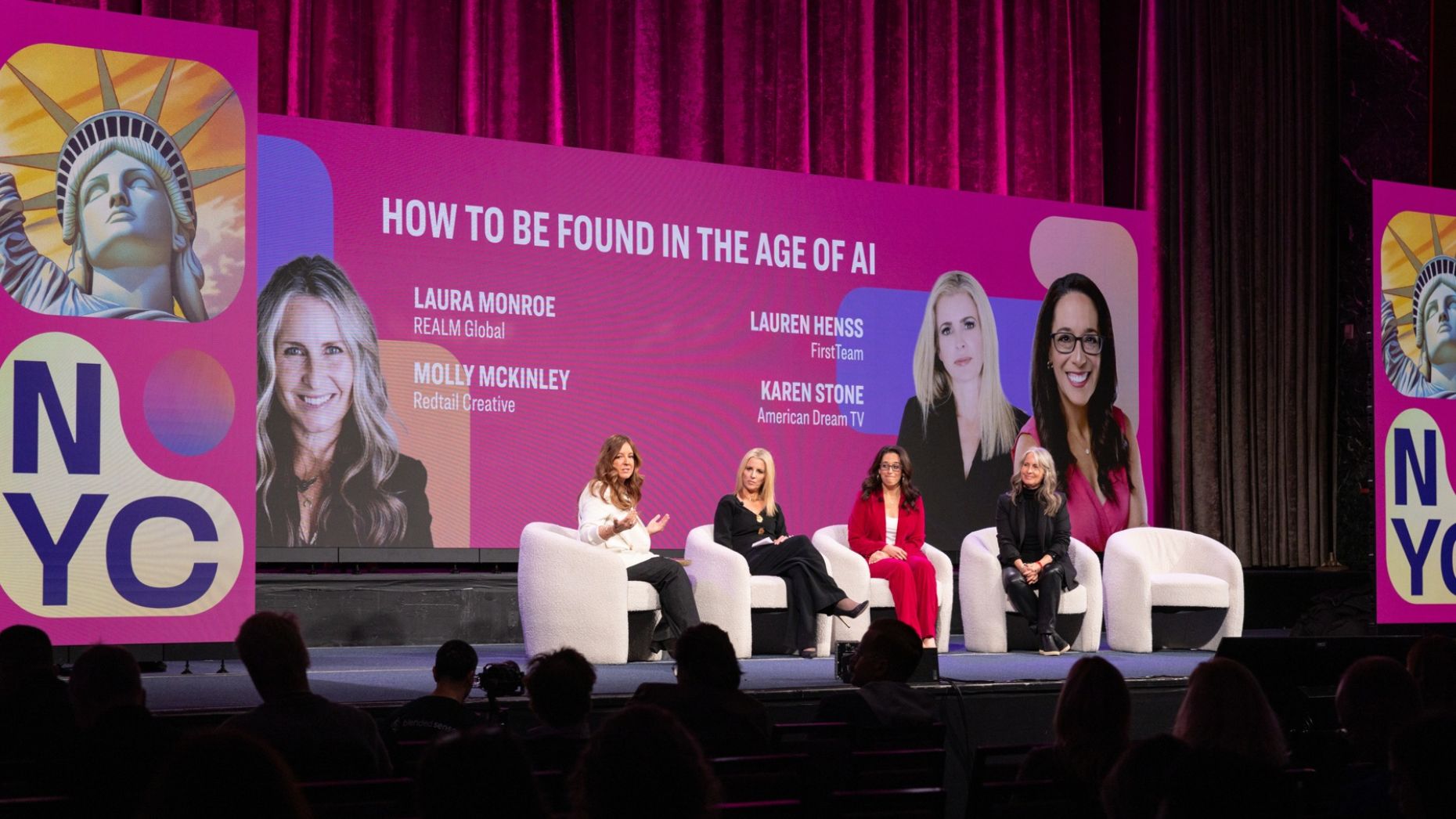
The authors onstage at Inman Connect New York 2026 | Credit: AJ Canaria Creative Services
You now have one to three seconds to earn relevance.
And here is the uncomfortable truth: Attention is rented. It is not owned.
For years, real estate marketing operated in the attention economy. Post more. Boost more. Funnel harder. Hack the algorithm.
But we are no longer in the attention economy.
We are in the trust economy.
AI is not a search engine. It’s a recommender
When a consumer types into ChatGPT, “Who is the best luxury real estate agent in Manhattan?”, the system does not return multiple blue links. It is synthesizing. It is recommending. It is making a probabilistic judgment about credibility.
Research from Bain & Company underscores how this shift is already underway: “About 80 percent of consumers now rely on AI‑written summaries for at least 40 percent of their searches, reducing the need to click through to another site.”
That distinction changes everything.
The top AI leaders are extremely vocal on the benefits of AI. Microsoft CEO Satya Nadella has described this shift succinctly: “Copilot is the UI for AI.” In other words, AI agents are becoming the interface layer through which consumers access information and make decisions.
Demis Hassabis, Google DeepMind’s CEO, has spoken about the shift toward AI “agents” that not only respond but plan, act and reason more autonomously — signaling a future where decision-support systems approximate broader human-like cognition.
Put simply: AI is rapidly becoming the front door to information.
And front doors determine who gets invited inside.
The 3-layer shift
To understand what’s happening, think of visibility as a three-layer cake.
- The base layer is SEO, traditional search engine optimization. Keywords. Rankings. Metadata.
- The second layer is AEO, answer engine optimization. Direct responses. Structured answers. Snippets. Voice search.
- The top layer is GEO, generative engine optimization. The conversation is happening inside AI itself.
Most agents are still optimizing for the first layer. Consumers have already moved to the third.
And here’s what makes this more complex: In an analysis of 3,000 AI search queries, the same query produced the same recommendation only twice.
There is no guaranteed ranking in generative search. There is no static “position one.”
There is only probability, and probability favors authority.
The collapse of the ‘I’m the best’ era
In the past, you could write on your website that you were “the leading expert” or a “top producer.” Marketing rewarded clever copy. That era is ending.
AI reads everything. It reads your reviews. It reads your transaction history. It reads your LinkedIn. It reads inconsistencies in your bio. It cross-references years in business, brokerage changes and stats.
This is not the moment to be creative. AI tools reward consistency.
If one platform says 20 years of experience and another says 15, the system notices. If you claim luxury expertise but your transactions suggest otherwise, the signal weakens.
We are witnessing a great equalizer.
For years, marketing favored those who could outspend or outshout the competition. Now, authority compounds quietly. The agents who have built durable businesses based on relationships and trust are positioned to win if they translate that credibility into digital signals AI can interpret.
Why earned media is ascending
There is another shift happening beneath the surface.
Consumers are exposed to up to 10,000 marketing messages a day on average. They remember about 100. They only act on one or two of them.
Interruption-based marketing is losing efficiency. Validation-based marketing is gaining leverage.
When an AI system evaluates credibility, it weighs third-party signals heavily. A quote in Inman. A mention in HousingWire. A citation in the local press. A professional presence on LinkedIn. These are not vanity plays; they are authority breadcrumbs.
In the trust economy, someone else saying you are credible matters more than you saying it about yourself.
This is not nostalgia for traditional PR. It is structural logic. AI systems are trained to identify reliable sources. Authority domains carry weight. Repeated themes build entity association. Context-rich reviews strengthen geographic relevance.
Noise does not.
From attention hacks to authority architecture
The real strategic mistake agents can make right now is assuming this is about more content.
It isn’t.
It is about coherent signals.
It is about ensuring that your name, markets, experience, transaction counts, reviews and professional presence align across platforms. It is about answering real buyer and seller questions in plain language. It is about being specific instead of generic. It is about building authority in two or three areas rather than claiming expertise everywhere.
Virality is rented.
Authority is infrastructure.
The agents who win in this environment will not be influencers. They will be interpreters. They will explain what buyers misunderstand. They will contextualize interest rates. They will articulate neighborhood nuance. They will do it consistently, calmly and clearly.
And AI will learn to trust them.
The strategic question moving forward
If a buyer types into an AI platform:
“Who should I trust to help me buy in Park City?”
Or:
“Who understands the Costa Mesa market right now?”
Would your name surface?
Not because you gamed the algorithm. Not because you boosted a post. But because the data supports your credibility.
That is the new bar.
Being found in the age of AI is not about hacking search. It is about earning a recommendation.
Attention is rented. Authority is owned.
And the agents who understand that distinction now will define the next decade of this industry.
Lauren Henss is the VP of Marketing & Strategic Initiatives for FirstTeam. You can connect with her on Instagram and LinkedIn.
Molly McKinley is an Entrepreneur in Residence at Meredith College and teaches about entrepreneurship, innovation and social impact. She is the founder of Redtail Creative and a certified yoga teacher (RYT500). She writes about technology and helps proptech companies build trust and authority for humans and AI.