

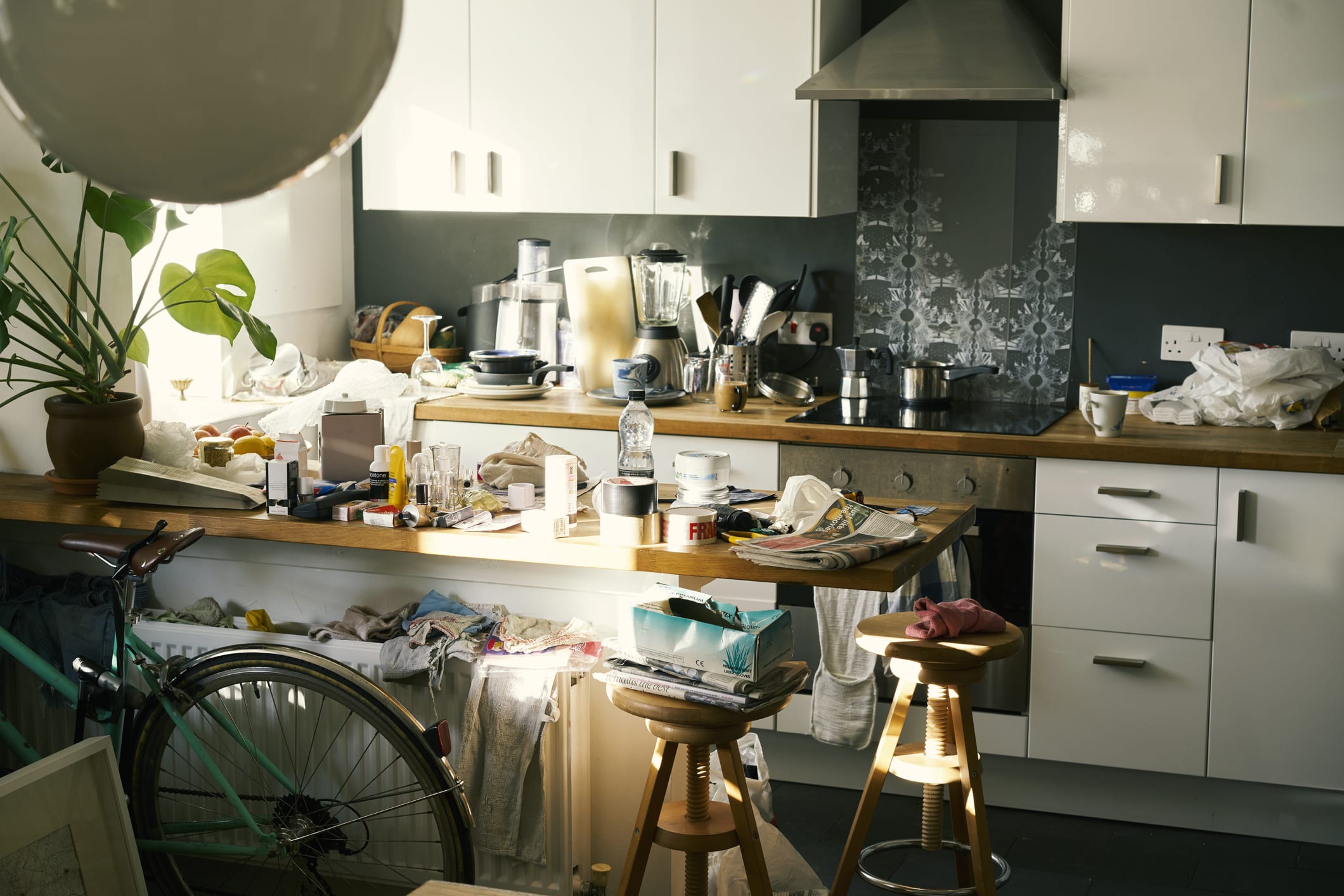
Dirty dishes in the sink, untidy living spaces, and bathrooms that have seen better days – these are just some of the signs you’ve moving into a crappy share house. Here are the other red flags to look for.
It can be difficult to know if you’ve chosen the right share house – because really, a quick ten-minute inspection never feels like enough time to spot the potential red flags a new home can present.
Once you’ve moved in however, it can become abundantly clean you’ve chosen the wrong one.
From lack of cleaning products and loud music late into the night to (gasp) no internet, there are several tell-tale signs that settling into your new share house will be a challenge.
1. Housemates come and go
If a share house is a great place to live, housemates will stay for as long as they can, but if there’s a high turnover, it’s a sign there could be something wrong.

Share housing can be hit and miss – but if it’s a high turnover home, that’s a red flag. Picture: Getty
Don’t be afraid to ask how long each housemate has lived in the share house for before agreeing to move in – it could hint at something that will make you want to move out too.
2. There’s no sign of cleaning products
The share house may have appeared clean during the inspection, but just how clean is the real question.
The grim discovery that there’s little to no cleaning products stocked in the house signals you could be in trouble.
Without a vacuum, how clean can the rug in the living room really be and no spray and wipe means the kitchen benchtops may not be the most hygienic place to prepare meals.
It’s not the end of the world though – you could suggest hiring a regular cleaner or starting a cleaning roster.
3. Noisy neighbours
Sometimes, it’s not the housemates who are the problem, it’s the neighbours and this won’t reveal itself until you’ve settled in.
Noisy neighbours can make life challenging to say the least – from stomping footsteps upstairs to band practice in the garage, there are many ways neighbours can interfere with a happy home.
While there’s no way to vet the neighbours before you move in, if they turn out to be a nightmare, have an open conversation. Picture: Getty
There’s no harm in leaving a courtesy note on a neighbour’s door to let them know they’re bothering you and if the noise persists, you can contact local authorities.
4. There’s no internet
With remote working now common place, it’s never been more important to have high-speed internet at home. However, not all houses are hooked up to the 21st century.
A share house without internet presents problems on multiple levels, from not being able to keep up with your favourite TV series, to using up data on your phone while you tether to Zoom meetings.
Bad internet in a share house is like having no hot water left – a nightmare. Optus can set you up with lightning fast nbn. Picture: Eugene Hyland
You could find a great deal, like Optus nbn plans which offers a $0 start-up fee, fast and reliable internet with a WiFi 6 modem included, unlimited data and a Netflix standard subscription included on select plans.
5. Your housemates all stay in their bedrooms
The common areas of a share house should be a place for housemates to gather, catch up after a long day and relax.
The worst kind of share house is one where everyone stays in their bedrooms in a bid to avoid each other.
Making the shared spaces more comfortable and organising regular housemate dinners could encourage your housemates to emerge from their lairs.
6. Maintenance issues
A maintenance issue with the house should be reported to the property manager or landlord immediately and fixed.
However, if you can see broken things around every corner, it’s a sign that either the housemates or the landlord is neglecting the property.
The leaking tap may not be an issue now, but living with it could signal no one will do anything if bigger issues arise.
Find out what the housemates’ relationship is like with the landlord or property manager to determine how well managed the property is.
7. Creepy crawlies lurk at every corner
Whether it’s mice, cockroaches or even slugs, infestations can be a nightmare to deal with. Not only are these critters hard to evict, but can make the living situation anxiety-inducing.
No one can fully switch off while wondering if there’s a mouse lurking around the corner.
Everyone’s version of cleanliness is different, but in a share house there should be a minimum standard everyone agrees to. Picture: Getty
Keep an eye out for signs of infestations when you inspect the property, and trust us, there will be signs.
8. You’re living in a party house
Everyone seemed to be working professionals in the initial meeting, but you suddenly realise your housemates prefer to bring the party home rather than go out on the town.
Grappling with strangers coming in and out of your home, loud music when you’re trying to sleep and hectic clean-ups the next morning is no way to feel settled in your new abode.
Make it clear in the interview that your home is your peaceful retreat not a place to throw a party.
9. Your prized possessions break or go missing
Sharing is caring in a share house, however, when you prized possession continue to break or go missing, it’s a sign your housemates have little to no respect for your belongings.
If you’re worried about certain pieces you bring into the house, put them into storage instead or explain how to best maintain them with your housemates.
10. You haven’t signed a lease or any formal agreement
One of the most important things when moving into a rental is having a signed agreement in place.
It means you’re protected if anything goes wrong and gives you a solid rental history for the future.
If you’ve moved into a share house that has no agreement with the landlord, a lot can go wrong from being evicted with limited notice, frequent rental increases and no liability when things go wrong around the property.
Talk about living on your toes! You don’t necessarily need to go on a lease, but you can sign a flatmate agreement.
This article was originally published on
20 Sep 2023 at 10:42am
but has been regularly updated to keep the information current.