

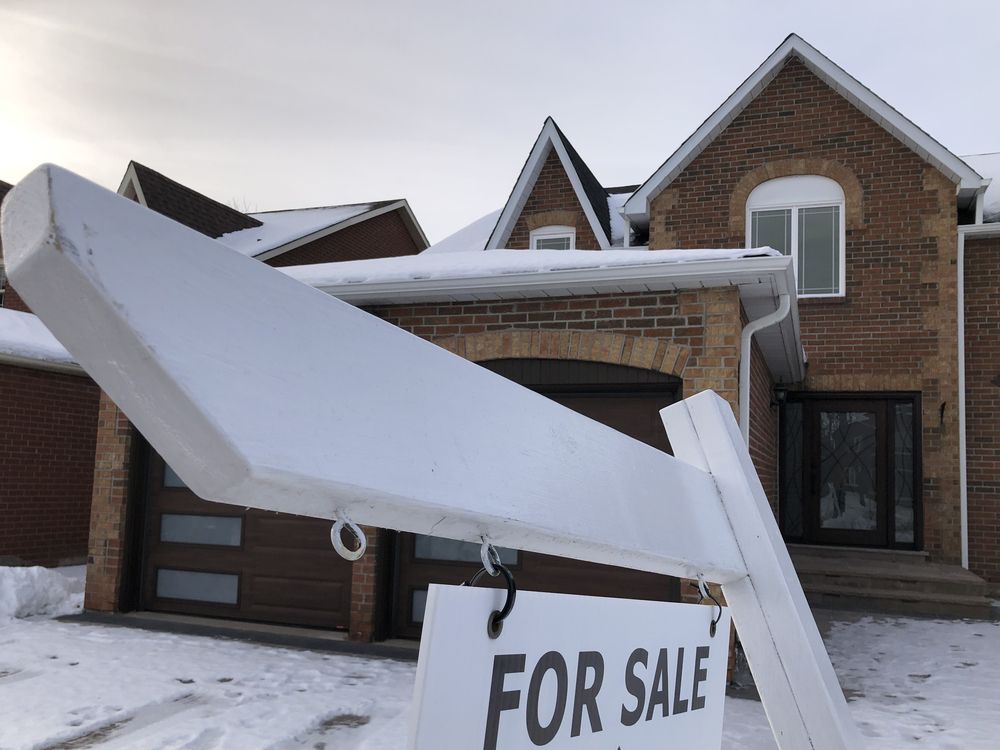
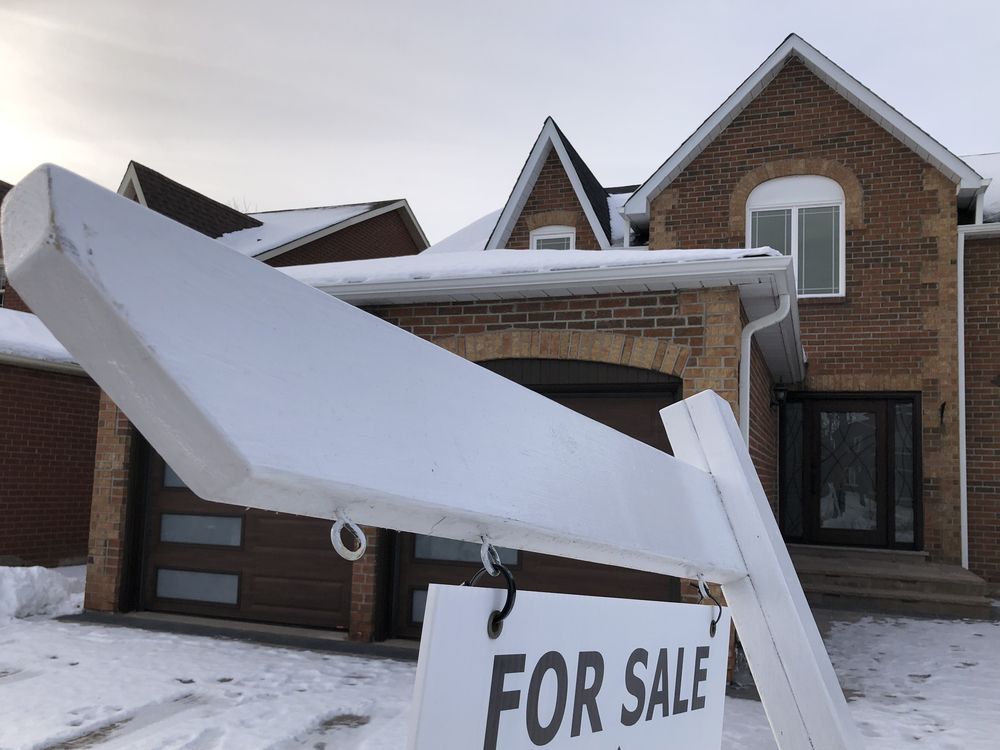
After Canada’s
housing market
was crippled by
tariff
-related economic uncertainty last year, a wave of pent-up demand from first-time homebuyers could spur more activity in 2026, the
Canadian Real Estate Association
(CREA) said Thursday.
At a press conference for CREA’s 2026-27 housing market forecast, senior economist Shaun Cathcart said Canadians who are likely to buy their first or second homes — those aged 30–34 and 35–39 — are now the two largest demographics in Canada. Younger people aged 20–24, who might be looking to buy condos, are the third largest.
While CREA doesn’t have a “database of pent-up demand,” Cathcart said realtors are seeing the evidence anecdotally. He referenced an October survey from Abacus Data that said 75 per cent of non-homeowners age 30 to 34 want to own a residential property someday.
Affordability is still a constraint, but Cathcart said the
Bank of Canada
signalling that it is done cutting
interest rates
could be a catalyst for potential buyers who were waiting to lock-in at the lowest possible rate.
“There are a lot of people in that cohort who have been like water building up behind a dam over these last four years that are going to come back eventually,” said Cathcart.
CREA forecasts 494,512 residential properties will change hands in 2026, up five per cent from 2025, with British Columbia and Ontario projected to lead the provinces in sales. It expects the national average home price to rise in 2026 by 2.8 per cent on an annual basis to $698,881.
Part of the problem younger generations face, Cathcart said, is the “missing middle” — a lack of dwelling types such as townhomes, duplexes and multiplexes that fall somewhere between low-density detached homes and high-rise buildings. If everything available for sale is too small or too expensive, Cathcart said that it could limit transactions.
“One of the biggest problems here is that people in their 30s are saying, ‘I need something big enough to start a family in,’ (and) it just doesn’t exist,” he said. “Or it exists in the legacy detached space, which is very expensive.”
Cathcart noted that Canada’s population growth has slowed recently, but the country still has about four million more people compared to before the COVID-19 pandemic.
“This is not a headwind for housing, as some have said,” he said. “It’s really just a much more moderate tailwind.”
However, the country’s housing market is on “new ground” and has never experienced a sustained period where demand wasn’t supported by population growth, CPA Canada chief economist David-Alexandre Brassard said in a note.
“The year ahead will test how buyers, sellers and builders adjust to a slower-growth market,” said Brassard. “Affordability could improve, but it comes with slow turnover, weak construction and pressure on household real estate wealth.”
CREA’s forecast comes as the organization reported Canada’s housing market ended 2025 “quietly,” capping off a year where overall home sales declined.
Realtors across the country sold a total of 470,314 units in 2025, down 1.9 per cent from 2024, CREA said in its latest market report.
“The year was characterized by a tariff-induced flight of buyers back to the sidelines in the first quarter, followed by a decent sales rally mid-year, and a bit of a stall to finish off 2025,” the report said.
December wrapped up the year with 41,500 sales, down 2.7 per cent on a seasonally adjusted basis and 4.5 per cent from a year earlier.
The non-seasonally adjusted National Composite MLS Home Price Index was down 4 per cent year-over-year.
“Under the surface, year-over-year declines are larger for condo apartments and townhomes, and smaller for one- and two-storey detached homes,” the report said.
The non-seasonally adjusted national average home price was $673,335, which CREA said was “virtually unchanged” from December 2024.
CREA reported 4.5 months of inventory on a national basis at the end of December, which Cathcart said is on the “tighter side” of the long-term average of five months. He noted that first-time homebuyers don’t add new stock to the market. If that cohort starts disproportionately buying homes this year, Cathcart said it could pull down inventory levels and tighten things up very quickly.
“You’ve seen it in the past in Toronto and Vancouver, but if it happens at the national scale, it could be back in the seller’s market, even conservatively, by the summer or fall,” he said.
Tony Stillo, director of Canada economics at Oxford Economics, said in a note that resale home prices in 2026 are expected to “slide lower before hitting rock bottom,” led by declines in the more expensive Toronto and Vancouver-area markets.
“Yet the resale housing market should break out of its slump by mid-year, supported by favourable mortgage rates, improved affordability, less trade policy uncertainty and a resumption of modest job growth assuming a successful renegotiation of the (Canada–United States–Mexico Agreement),” said Stillo.
“A strong fiscal impulse that builds as 2026 progresses should also help lift housing and the economy overall,” he said.
• Email: jswitzer@postmedia.com