

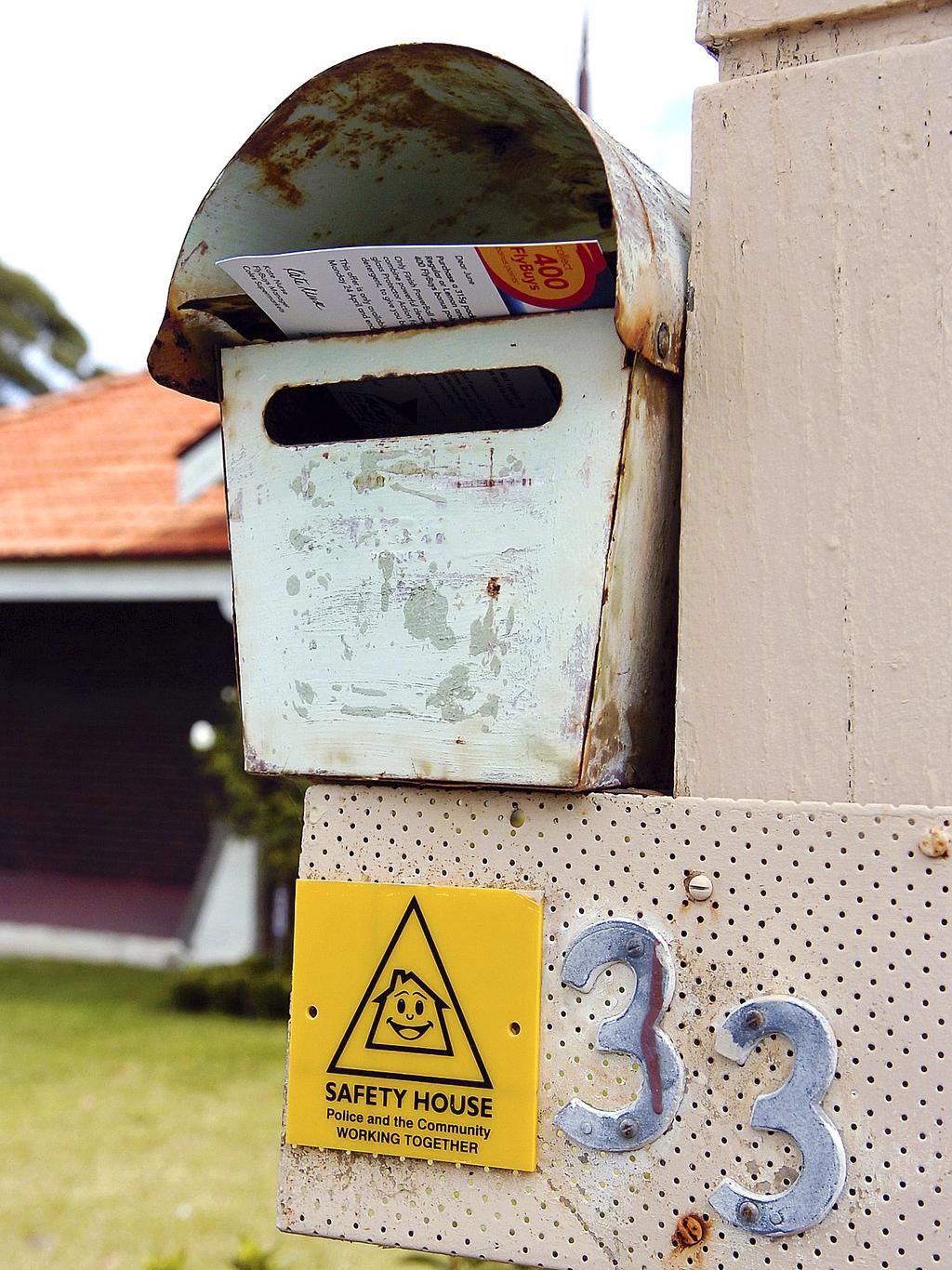
For many Australians who grew up in the 1980s and 90s, the sight of a bright yellow smiling house sign or a green-and-white Neighbourhood Watch emblem was as familiar as the local corner store.
These symbols represented a simpler time, a collective community effort to keep our streets safe.
But as society evolved, these programs largely faded.
The question now is, in our hyper-connected, yet often disconnected, world, could these community safety initiatives ever make a comeback?
The gentle guardians: Safety Houses
Cast your mind back.
Walking home from school, school bag almost bigger than you were, no mobile phone in sight.
But there was a quiet comfort in knowing that if you got lost, felt scared, or something just seemed a bit off, a Safety House was there.
Those little yellow signs, often stuck on fences, letterboxes, or front windows near schools, promised a trusted adult inside who would help.
It was a silent agreement that first started in Victoria in 1979: the neighbourhood was looking out for its kids.

Back in the 80s and 90s, walking home from school felt a little less scary when you knew there were Safety Houses along the way. Photo: Dave Swift.

Oonoomba celebrates the first anniversary of the local safety house initiative.
This simple, yet profound, idea was a hallmark of Australian suburbia.
It spoke volumes about community trust and the willingness of neighbours to lend a hand.
However, by the 2000s and 2010s, the yellow smiles began to disappear.
Several factors contributed to their decline.
Fewer children were walking to school, with many attending Out of School Hours Care (OSHC) programs.
More parents were working, meaning fewer stay-at-home adults were available to volunteer. The administrative burden also grew significantly, with background checks, insurance, training, and funding becoming complex hurdles.
Genuine safety concerns also emerged.

Former Upper Ross Safety House Committee Chairwoman Wendy Carew.

If you felt scared, got lost, were being followed, or something just felt a bit dodgy, the idea was simple: you could knock on the door and a trusted adult would help.
What if old signs were left on houses after residents moved?
Could fake signs be created and misused?
The very symbol designed to protect could, theoretically, be exploited.
With the advent of mobile phones for older children, the traditional Safety House system began to feel less relevant and harder to maintain.

Commander Frank Gilray and student Brittany Curtis putting up Safety House sign in Westfield Shopping Centre at Burwood. Picture: Armen Deushian

Jenny Piot with Gemma Deakin, Blake Armstrong and Louise Williams at Northlakes Public School for Safety House Program. Picture: Ron Hutchings
Most states eventually phased out or wound down their programs, though Western Australia still maintains a version, albeit with limited popularity.
Funding, largely from police grants, slowly dried up as interest waned.
For those who remember them, those yellow signs are etched into memory, a nostalgic reminder of an era when childhood freedom felt boundless, and community care was tangible.
The vigilant villagers: Neighbourhood Watch
Equally iconic was the green-and-white Neighbourhood Watch sign, featuring four stylised faces.
Perched on power poles, it was a subtle warning to would-be offenders: Mrs Jenkins from number 14 was definitely watching from behind her lace curtains.
Neighbourhood Watch launched in Australia in the 1980s, starting in New South Wales in 1984 and quickly spreading nationwide, with South Australia launching its first group in 1985.

Neighbourhood Watch SA bin stickers

Neil Cooper, a resident of Linley Point and co-ordinator of the local Neighbourhood Watch scheme, pictured with North Shore Local Area Command cops Sgt. Scott Horwood and Const. Michael Alexander in 2017.
It was a massive movement.
Volunteers collaborated with police, community hall meetings were packed, newsletters circulated, and everyone was encouraged to report anything suspicious.
In an era before ubiquitous CCTV, Ring doorbells, or local Facebook groups, this grassroots approach made perfect sense.
If something untoward happened, you either told the police, chatted over the fence, or waited for the next community meeting to discuss it over weak instant coffee.

Back in 2009, Neighbourhood Watch branch Ringwood East was thriving while others were struggling.

Banyule Neighbourhood Watch celebrated 35 years in 2018. Picture: Tim Carrafa
But like Safety Houses, the traditional Neighbourhood Watch model gradually faded.
People became busier, more households had two working parents, and fewer individuals had the time or inclination to spend a Tuesday evening discussing wheelie bin thefts.
The dedicated volunteers who kept these groups alive eventually aged, and younger generations didn’t embrace the movement with the same fervour.
By the 2000s and 2010s, many groups struggled, with some once-thriving areas seeing only a handful of attendees at meetings.
The digital evolution: Neighbourhood Watch 2.0
The interesting twist is that the idea of Neighbourhood Watch never truly died; it simply migrated online and, arguably, became far more chaotic.
Today, your local Neighbourhood Watch is often a Facebook group with a name like “Your Suburb Community Noticeboard.”
Here, you’ll find CCTV footage of car door-checkers, queries about circling helicopters, lost pet alerts, rants about scooter-riding teenagers, and the ever-present “Anyone else hear that bang?” post.

Senior Constable Dale Boyd displays one of the Neighbourhood Watch signs back in 1986.

Neighbourhood Watch first kicked off in Australia in the 1980s, starting in New South Wales in 1984, and then spreading across the country. South Australia followed in 1985.
Modern suburbia is still watching, but now it’s from the comfort of the couch, armed with screenshots, blurry Ring camera footage, and dozens of comments like “Shared in West Lakes, hun.”
Affordable home CCTV has revolutionised personal security.
Why wait for a monthly newsletter when footage of a parcel theft can be uploaded and shared within minutes?
While the formal Neighbourhood Watch organisations still exist in Australia, many have adapted, offering websites, dedicated online groups, and a broader focus on connected communities rather than just traditional crime spotting.

While much has changed since the 1980s, neighbourhood and children safety is still paramount with programs such as Neighbourhood Watch 4 Kids – an online education program – an important resource. Picture: Che Chorley
However, the classic version – the meetings, the stickers, the street captains, and those iconic signs – has undoubtedly receded.
Community engagement and support have dwindled, leading to significant reductions in government and police funding.
In a way, Neighbourhood Watch didn’t vanish; it simply transformed into the local Facebook group.
Could they work today?
The core principles behind Safety Houses and Neighbourhood Watch – community vigilance, mutual support, and a collective sense of responsibility – are arguably more important than ever.
However, the methods would need to adapt significantly to modern life.
A revived Safety House program would require robust digital infrastructure for vetting, real-time updates, and communication, addressing the administrative and safety concerns that led to its decline.
Perhaps a modern version could leverage existing community hubs, like local businesses or community centres, rather than relying solely on individual homes.
As for Neighbourhood Watch, its spirit already thrives online.
The question isn’t whether the exact programs could return, but rather how we can re-imagine and implement their foundational values in a way that resonates with contemporary Australian life.